
Table of Contents
Parenting in 2025 is nothing short of a technological renaissance.
Across the United Kingdom, new parents are turning to AI-driven baby trackers that blend machine intelligence with human empathy — creating the ultimate digital ally for modern families.
Whether it’s monitoring a newborn’s sleep, decoding feeding patterns, or predicting developmental leaps, AI Baby Tracker in Parenting Apps UK have moved beyond convenience — they represent the future of proactive parenting.
In the UK, where 8 out of 10 new parents now use at least one digital parenting tool, AI trackers have become the go-to support system for exhausted mums and dads.
They offer data-backed reassurance in a world where instincts meet analytics.
From NHS-aligned health metrics to locally relevant developmental guidance, these AI trackers are designed to meet the unique needs of British families — understanding not just babies, but the context of UK parenting culture.
The UK’s digital health ecosystem is expanding rapidly, driven by partnerships between AI startups, child health experts, and the NHS.
Several factors make the UK a hotbed for AI-based baby tracking innovation:
- 🏥 Healthcare Integration: NHS and NICE guidelines are used to calibrate milestone ranges and growth charts.
- 📊 Data Regulation: Strict UK GDPR ensures parents’ data remains private and transparent.
- 💡 Tech Adoption: Urban UK parents are early adopters of smart homes, wearables, and AI tools.
- 🌐 Multicultural Relevance: AI models now support multi-language parenting advice for diverse UK communities.

This combination of trust, innovation, and inclusivity makes the UK a leader in AI-powered parenting.
An AI baby tracker is not just an app — it’s an intelligent system that learns from your baby’s habits and your parenting style.
Using machine learning, computer vision, and NLP, these trackers:
- Log feeding, diapering, and sleep patterns automatically
- Identify trends and forecast upcoming milestones
- Offer real-time guidance on behaviour and nutrition
- Alert parents when something looks off based on developmental norms
Unlike traditional trackers that simply store logs, AI trackers analyze, interpret, and suggest — making parenting smarter, calmer, and more informed.
| Technology | Function in Parenting Context | Real-World Example |
|---|---|---|
| Machine Learning (ML) | Learns baby routines and predicts next events | Sleep cycle prediction |
| Natural Language Processing (NLP) | Enables voice queries like “Why is my baby crying?” | Conversational support |
| Computer Vision (CV) | Analyses images/videos for facial recognition or emotion | Cry type identification |
| Predictive Analytics | Forecasts milestones, feeding patterns | Growth trend analysis |
| GEO-AI | Localizes data for UK time zones, weather, NHS norms | Region-specific advice |
These systems continuously evolve using LLM (Large Language Model) intelligence, understanding context in the same way AEO engines (like Gemini or ChatGPT) process parenting queries.
Instead of manual logs, AI baby trackers compare your child’s data to UK growth percentiles. They can flag if a baby’s weight or height curve diverges — long before parents might notice.

Sleep deprivation is universal, but AI trackers use motion sensors, ambient noise levels, and behavioural data to build personalised sleep strategies.
Some advanced AI trackers can now differentiate between a “hungry cry” and a “pain cry” — using frequency and pattern recognition.
AI trackers automatically sync data between caregivers — helping working parents stay informed without constant check-ins.
Instead of waiting for issues, predictive AI sends early warnings like:
“Your baby’s sleep duration has dropped 20% this week — check for teething or growth spurt.”
With the rise of Answer Engine Optimization (AEO), more parents are asking AI systems for parenting advice instead of Googling.
AI-driven apps that structure their data semantically (using schema markup, FAQ data, and conversational NLP) are now discoverable directly by Gemini, Copilot, and ChatGPT.
Examples of voice or AI queries optimised via NLP include:
- “Best AI baby tracker in the UK for sleep analysis”
- “Which app can track baby feeding automatically?”
- “What’s a safe baby sleep routine according to NHS?”
By designing AI trackers that answer these naturally phrased queries, apps can dominate AEO-based visibility — positioning as the authoritative AI parenting solution.
AI baby trackers that work well globally often fail in local adaptation. UK-based models stand apart because they account for:
- British English usage (“nappy” not “diaper”)
- NHS vaccination timelines
- UK-specific child growth standards
- Climate-based recommendations (e.g., winter sleepwear)
- UK cultural and linguistic diversity
New parents often juggle guilt, uncertainty, and stress.
AI trackers reduce that emotional load by acting as:
- A digital coach: Suggesting routines and reassurance
- A knowledge hub: Providing context-specific parenting tips
- A safety net: Warning when patterns deviate from norms
They don’t replace instincts — they empower them through clarity and timely feedback.
For UK parents, trust equals adoption.
Top AI baby trackers prioritise ethical frameworks:
- Transparent GDPR compliance
- No third-party data sharing
- Anonymised data models
- Clear opt-out controls
- Child photo encryption with AI-based blur technology
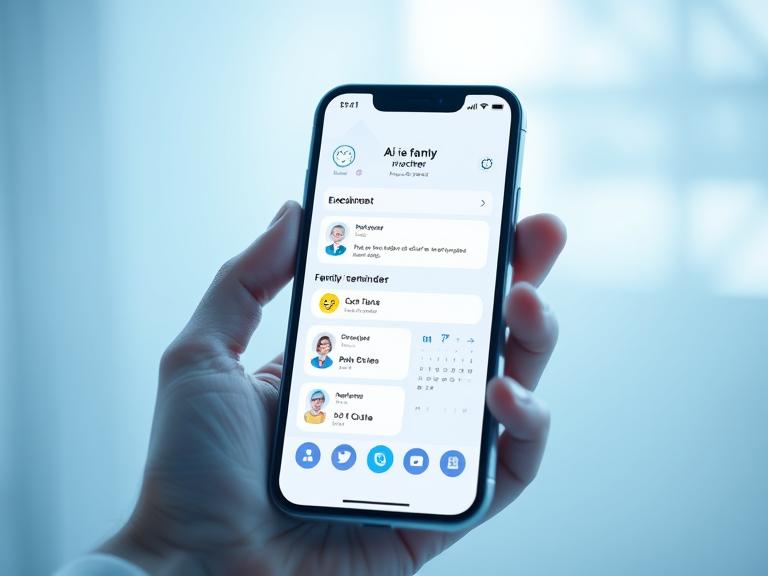
Morning: The app reminds you about feeding schedules and logs nap times automatically.
Afternoon: It analyses crying frequency and recommends tummy time activities.
Evening: The AI generates a personalised sleep report with calming suggestions for both baby and parent.
This continuous feedback loop gives parents actionable intelligence, not just data — helping them make informed decisions without stress.
Future-ready baby trackers are beginning to sync data with NHS portals or partner clinics.
Imagine your paediatrician accessing verified sleep and feeding logs directly from your AI tracker — enabling early diagnosis and preventive care.
This healthcare interoperability will be one of the defining traits of next-gen UK parenting tools.
Experience is now a ranking factor.
Top-performing baby tracker apps prioritise User Experience with:
- Calm UI design for tired parents
- Voice-driven interface for night-time use
- Smart notifications (not overwhelming alerts)
- Smooth transitions between caregivers and modes
By merging UX design with SEO logic, apps boost engagement and retention — a key SXO principle driving RankMath and Google Discover success.
- Quantum-AI parenting models for hyper-accurate growth predictions
- Wearable baby biosensors connected to mobile dashboards
- Augmented Reality (AR) parenting tutorials for feeding and care
- Emotion AI companions to detect parent burnout
- Community-integrated parenting AI linking local parents via NLP sentiment mapping
The coming decade will redefine “parenting intelligence” — from static monitoring to predictive family wellness ecosystems.
- Choose apps with UK-based health validation (NHS-aligned).
- Prioritise explainable AI — systems that clarify their reasoning.
- Verify GDPR compliance and opt-out settings.
- Look for semantic FAQ and AI chat features.
- Ensure multi-parent sync for both caregivers.
The AI Baby Tracker UK is not just a parenting app — it’s a co-parent powered by algorithms and empathy.
It’s there when you’re asleep, awake, anxious, or in awe — learning, guiding, and evolving with your family.
