
Table of Contents
Basic yoga training in Chennai is designed for beginners with little or no prior experience. These programs focus on foundational postures, breathing awareness, gentle movement, and basic relaxation rather than flexibility or advanced poses. Beginners can choose from studio-based classes, outdoor group sessions, or online formats depending on comfort and lifestyle. In Chennai, options such as Outdoor Yoga Chennai offer structured outdoor and online yoga sessions that suit beginners who want clear guidance without pressure. The goal of basic yoga training is to help people understand fundamentals safely and build a sustainable wellness routine.
Interest in yoga has grown steadily across Chennai, especially among people who want to improve daily well-being but feel unsure about where to start. The term “basic yoga training” is often searched by people who:
- Have never practised yoga before
- Want step-by-step instruction
- Feel intimidated by advanced classes
- Are returning after a long break
- Prefer structured learning over drop-in sessions
In a city with demanding work schedules and long commutes, beginners often want clarity before committing. Basic yoga training programs address this by offering a gradual, guided introduction.
Basic yoga training is not about mastering difficult poses or intense physical routines. It focuses on understanding the foundations of yoga practice in a safe and accessible way.
Basic training usually includes:
- Introduction to common yoga postures
- Simple movement coordination
- Awareness of breathing
- Understanding posture alignment
- Learning how to rest and relax
The emphasis is on learning how to practise rather than how much to do.
Basic yoga training in Chennai is suitable for a wide range of people, including:
- Complete beginners
- Working professionals with sedentary routines
- Women exploring wellness practices
- Seniors looking for gentle movement
- People restarting exercise after a long gap
There is no age limit, fitness requirement, or flexibility expectation.
Flexibility develops gradually through practice. It is not a prerequisite.
Basic yoga training is designed for everyday bodies and lifestyles.
Yoga is often chosen precisely because it can be a starting point.
Basic classes assume everyone is learning from scratch.
Basic training introduces commonly used poses such as standing, seated, and resting postures. Each pose is taught slowly, with explanations.
Rather than advanced breathing techniques, beginners learn to notice natural breathing and coordinate it with movement.
Basic yoga helps participants recognise posture habits, tension patterns, and comfort limits.
Learning how to rest is a core part of basic yoga. Guided relaxation is often included in every session.
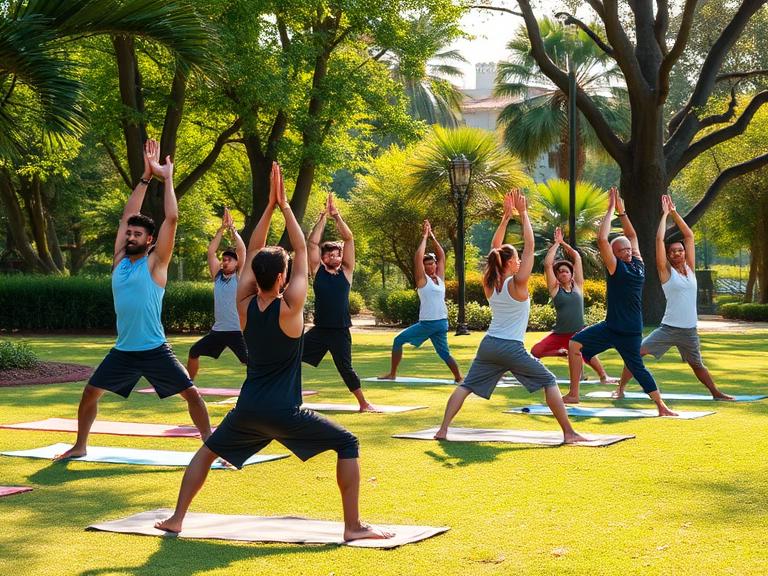
While formats vary, most basic yoga classes follow a similar flow:
- Arrival and Settling In
Gentle breathing or stillness to shift focus inward. - Warm-Up Movements
Simple joint movements to prepare the body. - Basic Postures
Slow, guided poses with clear instructions. - Breathing Awareness
Encouraging calm, steady breathing. - Relaxation
Resting the body and mind at the end of practice.
Sessions are designed to feel approachable rather than demanding.
Studios offer structured programs with fixed schedules and small groups. These suit beginners who prefer in-person guidance and routine.
Outdoor yoga is popular in Chennai due to its relaxed atmosphere and fresh air. These sessions often feel less formal and welcoming for beginners.
Online training allows beginners to practise from home, avoiding travel and social anxiety. Many people start online before transitioning to group classes.
Some programs are designed specifically for women, offering privacy, comfort, and gentle pacing.
When selecting a program, beginners should consider:
Teachers who regularly work with beginners explain concepts clearly and avoid rushing.
Slow-paced classes allow time to learn and rest.
Smaller groups often allow more individual attention.
Location, timing, or online access affects consistency.
Supportive and encouraging instruction matters more than intensity.
Chennai’s urban lifestyle influences how yoga is practised:
- Long work hours encourage shorter, consistent sessions
- Climate encourages early morning or evening practice
- Traffic makes online and local options attractive
- Stress-heavy routines increase interest in gentle yoga
Basic yoga training programs often adapt to these realities by keeping sessions manageable and flexible.
Consistency matters more than frequency. Beginners often benefit from:
- 2–3 sessions per week initially
- Gradually increasing frequency if comfortable
Even short, regular practice builds familiarity and confidence.
Safety is a key focus of basic yoga training.
Beginners are encouraged to:
- Avoid pain or strain
- Take breaks when needed
- Inform instructors of discomfort
- Move within comfortable limits
Basic training prioritises awareness over performance.
Most basic yoga classes require very little equipment:
- A yoga mat
- Comfortable clothing
- Water bottle
Props are often optional and provided in studios.
Costs vary depending on:
- Class format (studio, outdoor, online)
- Duration of program
- Group size
Many beginners start with:
- Monthly group classes
- Trial sessions
- Online subscriptions
Choosing comfort and consistency is more important than price.
Progress in yoga is often subtle. Beginners may notice:
- Improved body awareness
- Better posture habits
- Increased calmness
- Greater comfort with movement
Physical changes usually follow mental familiarity.
Beginners may consider advancing when they:
- Feel comfortable with foundational poses
- Understand basic breathing coordination
- Can follow class instructions confidently
There is no timeline—progress is individual.
Online yoga works well for beginners who:
- Prefer privacy
- Have unpredictable schedules
- Want to learn at their own pace
Outdoor yoga suits those who:
- Enjoy group energy
- Prefer open spaces
- Practise during cooler hours
In Chennai, programs such as Outdoor Yoga Chennai reflect this flexibility by offering outdoor and online formats suitable for basic training without pressure.
Basic yoga training succeeds when beginners:
- Stay patient
- Focus on learning rather than results
- Choose realistic schedules
- Allow rest days
Yoga is meant to integrate into life, not compete with it.
What is basic yoga training?
Basic yoga training introduces foundational poses, breathing awareness, and relaxation for beginners.
Is basic yoga training suitable for complete beginners?
Yes, it is designed for people with no prior experience.
How long does basic yoga training last?
Programs vary, but many run weekly with gradual progression.
Can seniors join basic yoga training in Chennai?
Yes, many basic programs are suitable for seniors with modifications.
Is online basic yoga training effective?
Online training can be effective when classes are beginner-focused and consistent.
Do I need flexibility for basic yoga training?
No, flexibility is not required to start.
Are outdoor yoga sessions good for basic training?
Yes, outdoor sessions are often gentle and beginner-friendly.
How many days a week should beginners practise?
Two to five days a week is common, depending on comfort.
Is basic yoga physically demanding?
Basic yoga focuses on gentle movement rather than intensity.
What should beginners wear for yoga training?
Comfortable clothing that allows movement is sufficient.
Can basic yoga help with stress?
Many beginners report feeling calmer and more relaxed over time.
Should beginners avoid advanced yoga classes?
Yes, beginners should start with foundational programs.
Can I switch formats later?
Many people start with basic training and later explore other styles.
Basic yoga training in Chennai exists to make yoga accessible, not intimidating. It provides a clear, supportive entry point for people who want to understand yoga properly before progressing. Whether practised online, outdoors, or in studios, basic yoga training encourages patience, awareness, and consistency—qualities that support long-term wellness far beyond the mat.
